11. Community
TEI Lex-0 is developed and maintained by an open community of lexicographers, TEI practitioners, and infrastructure partners.
Preliminary work for the establishment of Lex-0 started in the Working Group "Retrodigitised Dictionaries" lead by Toma Tasovac and Vera Hildenbrandt as part of the COST Action European Network of e-Lexicography (ENeL). Upon the completion of the COST Action, the work on TEI Lex-0 was taken up by the DARIAH Working Group "Lexical Resources". From 2018-2022, the work on TEI Lex-0 was also supported by the H2020-funded European Lexicographic Infrastructure (ELEXIS).
11.1. DARIAH Working Group
The DARIAH Working Group on Lexical Resources is a self-organized scholarly community working under the auspices of the pan-European Digital Research Infrastructure for Arts and Humanities (DARIAH-EU). The goals of the WG are:
- to explore, assess and recommend standard tools and methods for the creation, application and dissemination of born-digital and retro-digitized lexical resources (dictionaries, lexicons, thesauri, word lists etc.) as well as other, similar kinds of structured data (gazetteers, almanacs, encyclopaedias etc.); and
- to foster, develop and publicize digitally-enabled lexicographic research from a cross-disciplinary and transnational perspective.
The WG focuses on the application and explication of existing standards, both onomasiological (TMF, TBX and SKOS) and semasiological (LMF, TEI, and Ontolex); draws upon the expertise of various DARIAH partners who are active in this field; and collaborates with relevant external projects and associations, such as the European Lexicographic Infrastructure (ELEXIS) and CLARIN in order to ascertain the widest possible reach of the Working Group’s results.
At the same time, the WG pursues a strong research-driven agenda on the diversity of European lexicographic heritage. In addition to investigating pan-European vocabularies and multiple dimensions of lexical borrowing, the working group evaluates current practices and formulates guidelines on data enrichment and mutual linking of existing electronic dictionaries in view of their common European heritage.
WG Chairs
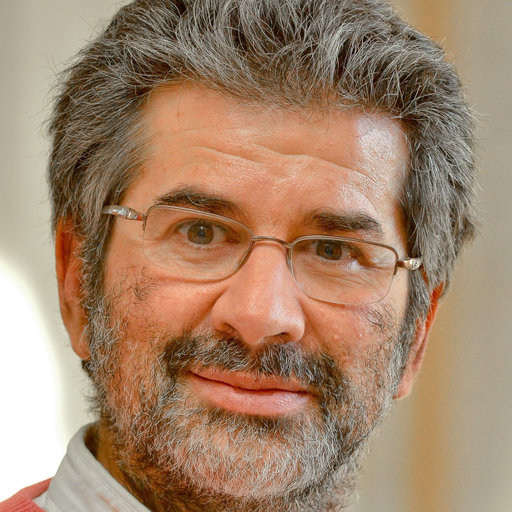
Laurent Romary is Directeur de Recherche at Inria (team ALMAnaCH (France)). He received a PhD degree in computational linguistics in 1989 and his Habilitation in 1999. He carries out research on the modelling of semi-structured documents, with a specific emphasis on texts and linguistic resources. He has been active in standardisation activities with ISO, as chair of committee ISO/TC 37/SC 4 (2002-2014), chair of ISO/TC 37 (2016-) and the Text Encoding Initiative, as member (2001-2011) and chair (2008-2011) of its Technical Council. He also has a long-standing implication in open science related activities.

Toma Tasovac is Director of the Belgrade Center for Digital Humanities (BCDH) and Director Emeritus of DARIAH-EU. He was educated at Harvard University, Princeton University and Trinity College Dublin. His areas of interest include lexicography, data modeling, TEI, digital editions and research infrastructures. Under Toma's leadership, BCDH has received funding from various national and international granting bodies, including Erasmus Plus, Horizon 2020 and Horizon Europe.
DigiLex Blog
The working group runs a blog called DigiLex: Legacy Dictionaries Reloaded as a platform for sharing tips, raising questions and discussing methods for the creation of lexical resources.
11.2. ELEXIS
ELEXIS was a H2020-funded project which proposes to integrate, extend and harmonise national and regional efforts in the field of lexicography, both modern and historical, with the goal of creating a sustainable infrastructure which will (1) enable efficient access to high-quality lexical data in the digital age, and (2) bridge the gap between more advanced and lesser-resourced scholarly communities working on lexicographic resources.
11.3. Contributors
Over the years, various scholars have contributed to the activities of the Working Group and the development of Lex-0. This list includes both current and past members.
- Petra Bago
- Piotr Bański
- Jack Bowers
- Jesse de Does
- Katrien Depuydt
- Veronika Engler
- Tomaž Erjavec
- Alexander Geyken
- Axel Herold
- Vera Hildenbrandt
- Fahad Kahn
- Mohamed Khemakhem
- Boris Lehečka
- Charly Moerth
- Snežana Petrović
- Laurent Romary
- Ana Salgado
- Daniel Schopper
- Kinga Sramó
- Toma Tasovac
- Andreas Witt
11.4. The Rahtz Prize
In recognition of their work on TEI Lex-0, the DARIAH WG Lexical Resources was awarded the 2020 Rahtz Prize for TEI Ingenuity.
Members of the DARIAH Working Group Lexical Resources have made a valuable contribution to the Dictionaries Chapter of the TEI Guidelines. Their efforts and their expertise have been formidable and highly appreciated by the TEI Community for many years. — Martina Scholger, Chair of the TEI Technical Council
11.5. Meetings
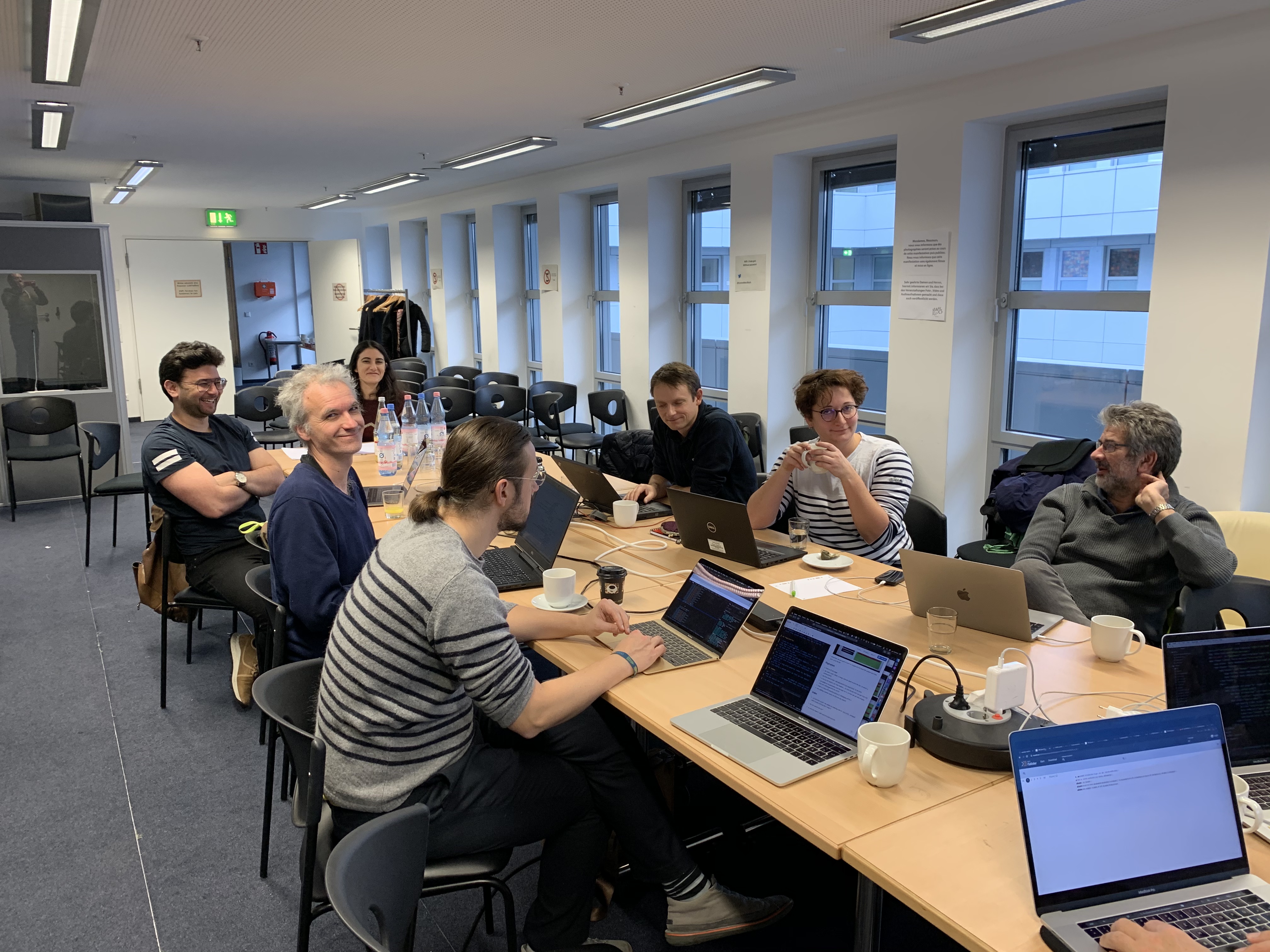
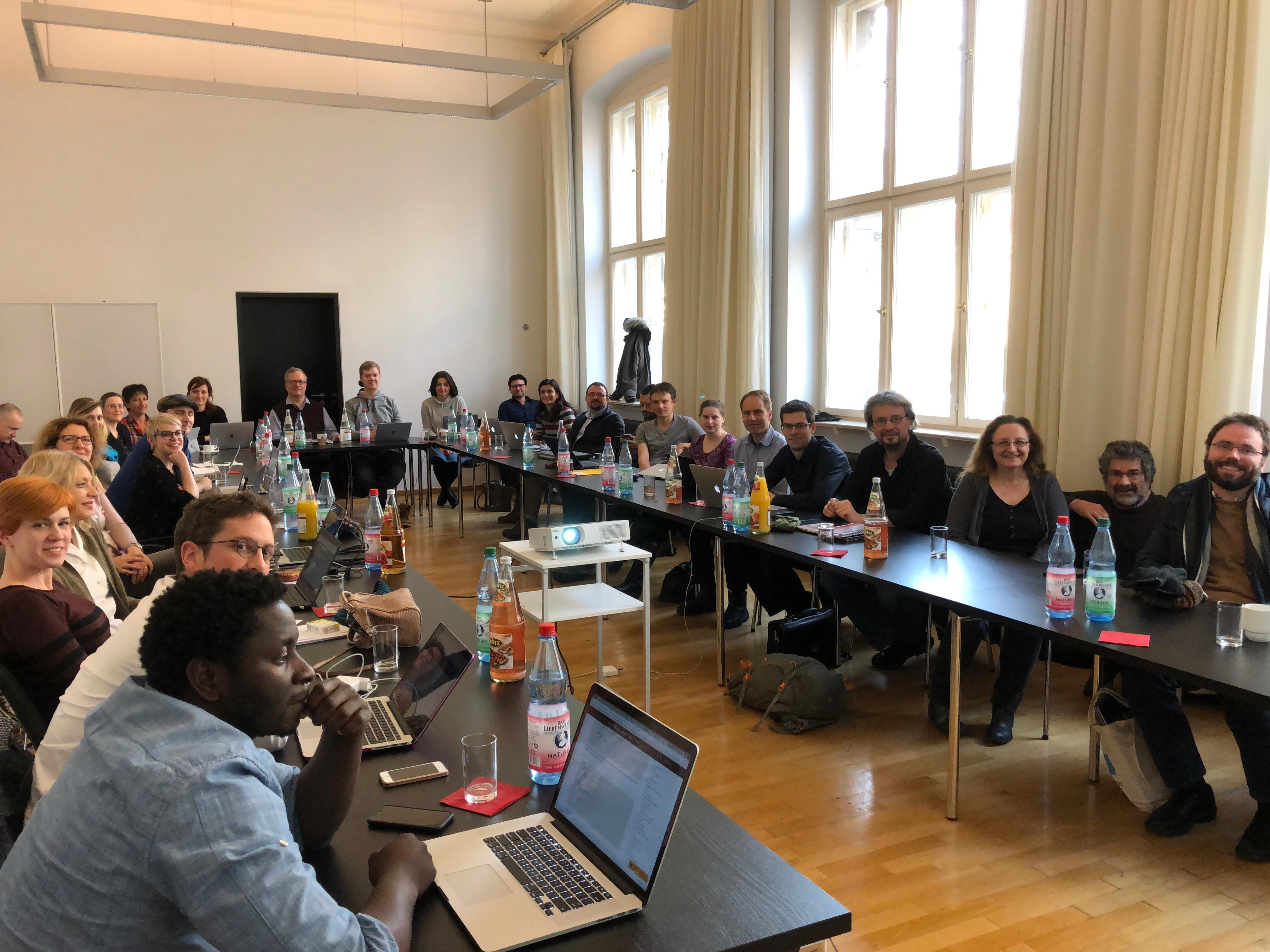
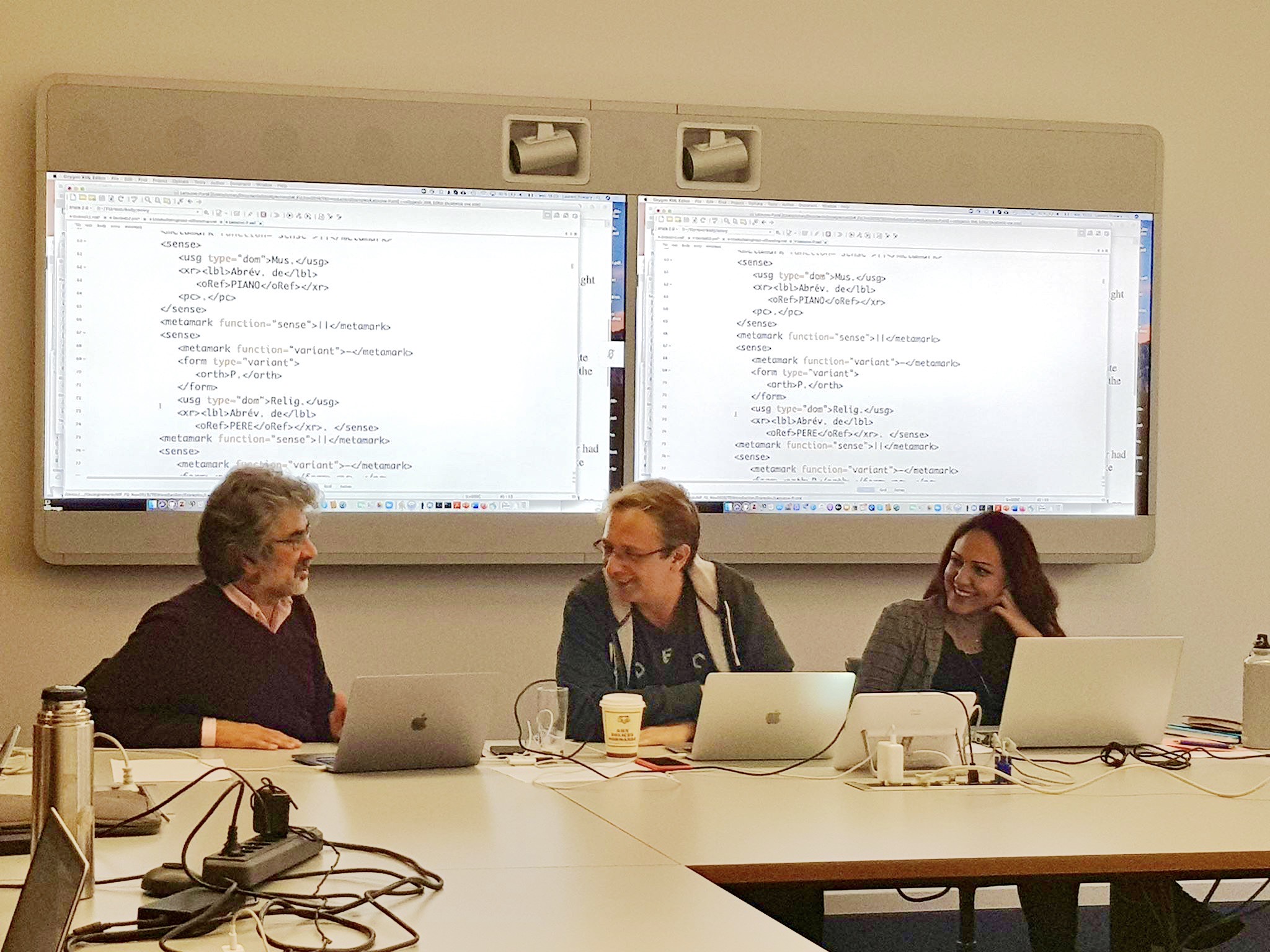
The Working Group has organized a number of working meetings dedicated to the development of TEI Lex-0. These include:
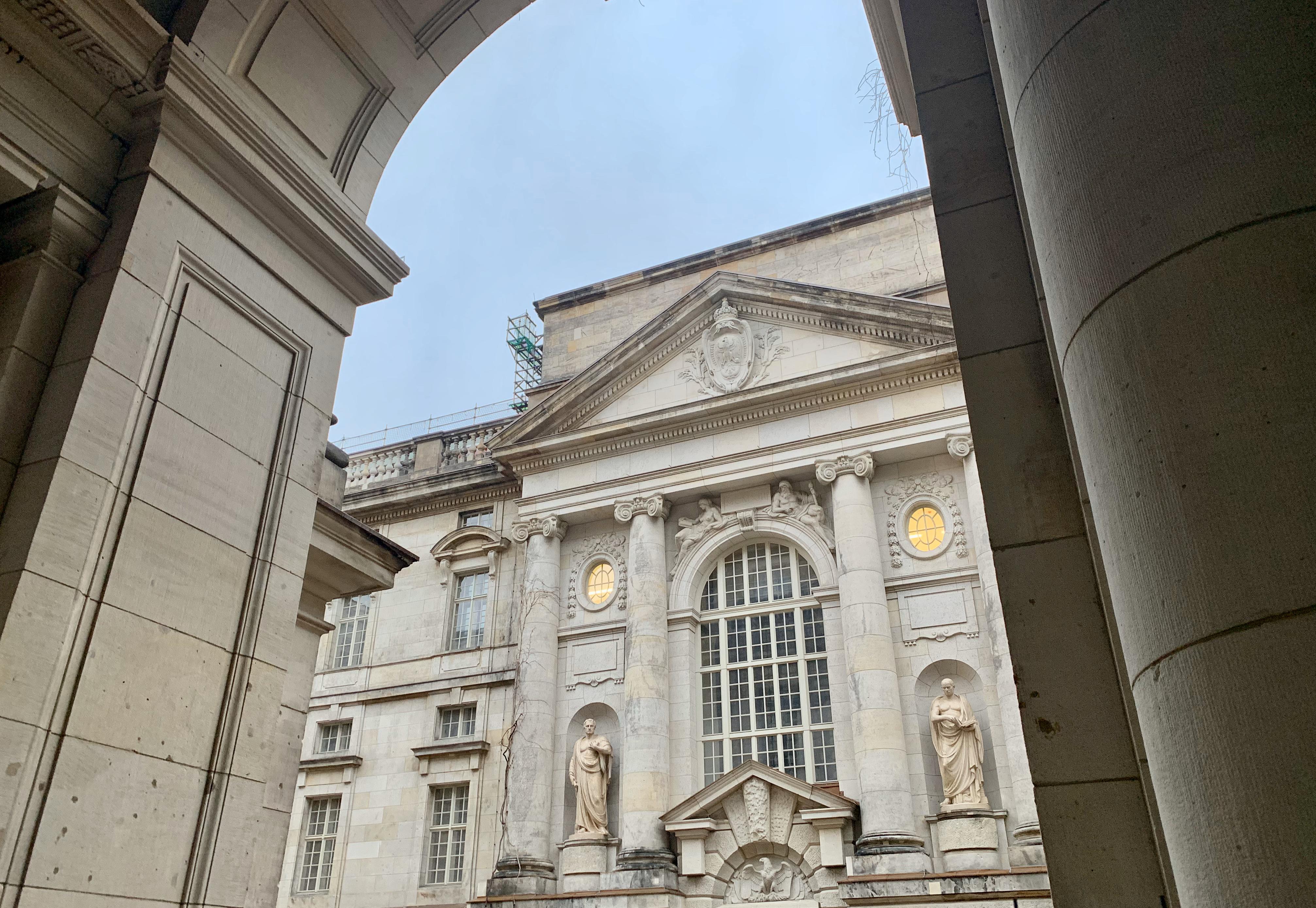
- Toward Best Practice Guidelines for Encoding Legacy Dictionaries: An ENeL-DARIAH-PARTHENOS Expert Workshop. Preußische Staatsbibliothek, Berlin (17-19 November 2016).
- Overview of Retrodigitized Dictionaries and Best-Practice Guidelines For Encoding Legacy Dictionaries. ENeL Annual Meeting, Budapest (24 February 2017).
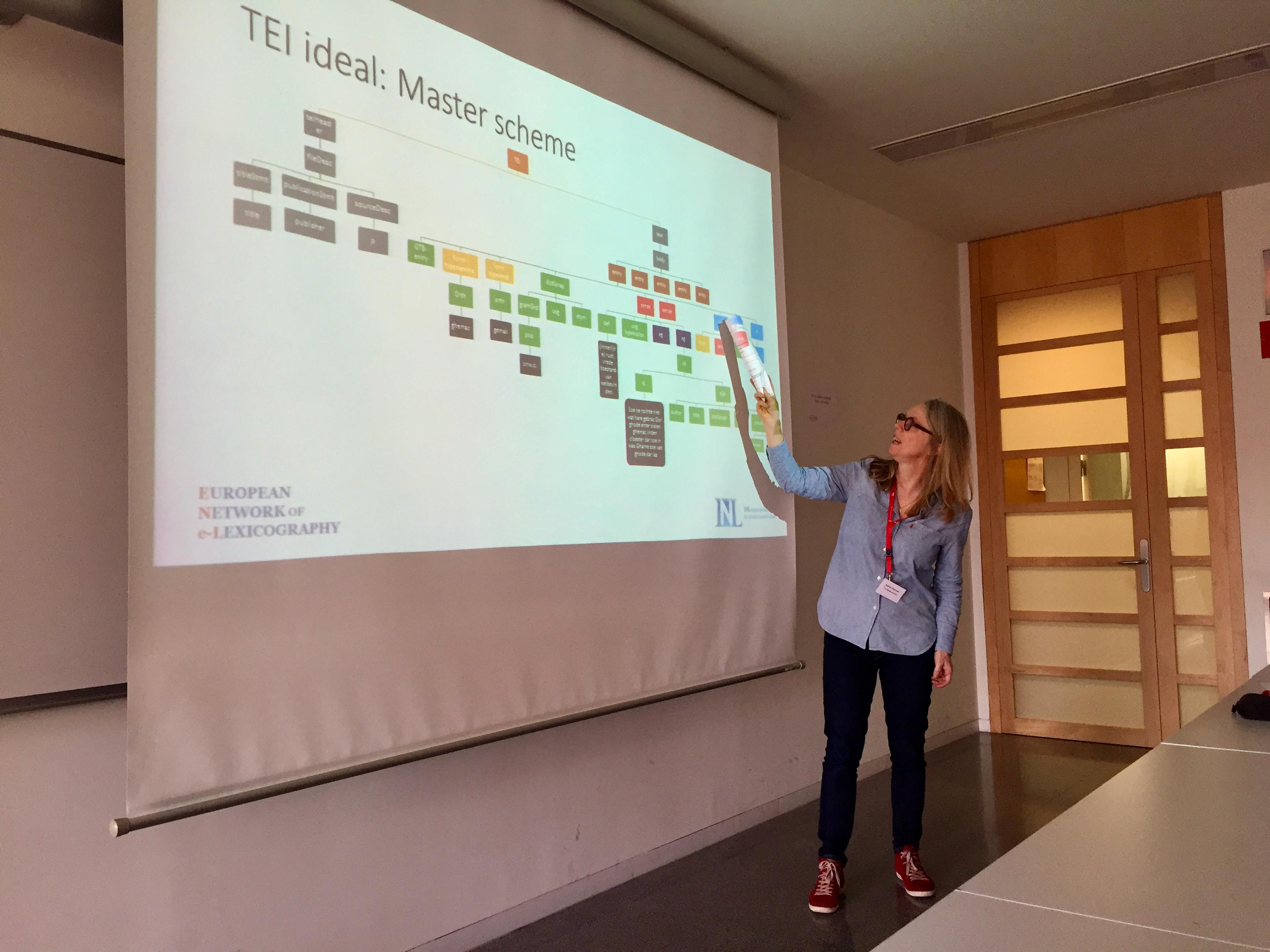
- TEI Lex-0 @DARIAH WG "Lexical Resources". Harnack Haus, Freie Universität Berlin (27 April 2017).
- TEI Lex-0 @DARIAH WG "Lexical Resources". Austrian Center for Digital Humanities, Austrian Academy of Sciences, Vienna (26 June 2017).
- TEI Lex-0: From Best-Practice Guidelines to a TEI Schema. DARIAH-EU Coordination Office, Berlin (2-3 May 2018). Funded by DARIAH-EU's Working Groups Funding Scheme and ELEXIS.
- TEI Lex-0 and Beyond: A Workshop. University of Ljubljana (16 July 2018). Funded by DARIAH-EU's Working Group Funding Scheme and ELEXIS.
- TEI Lex-0 Meeting. DARIAH-EU Coordination Office, Berlin (30 January 2019).
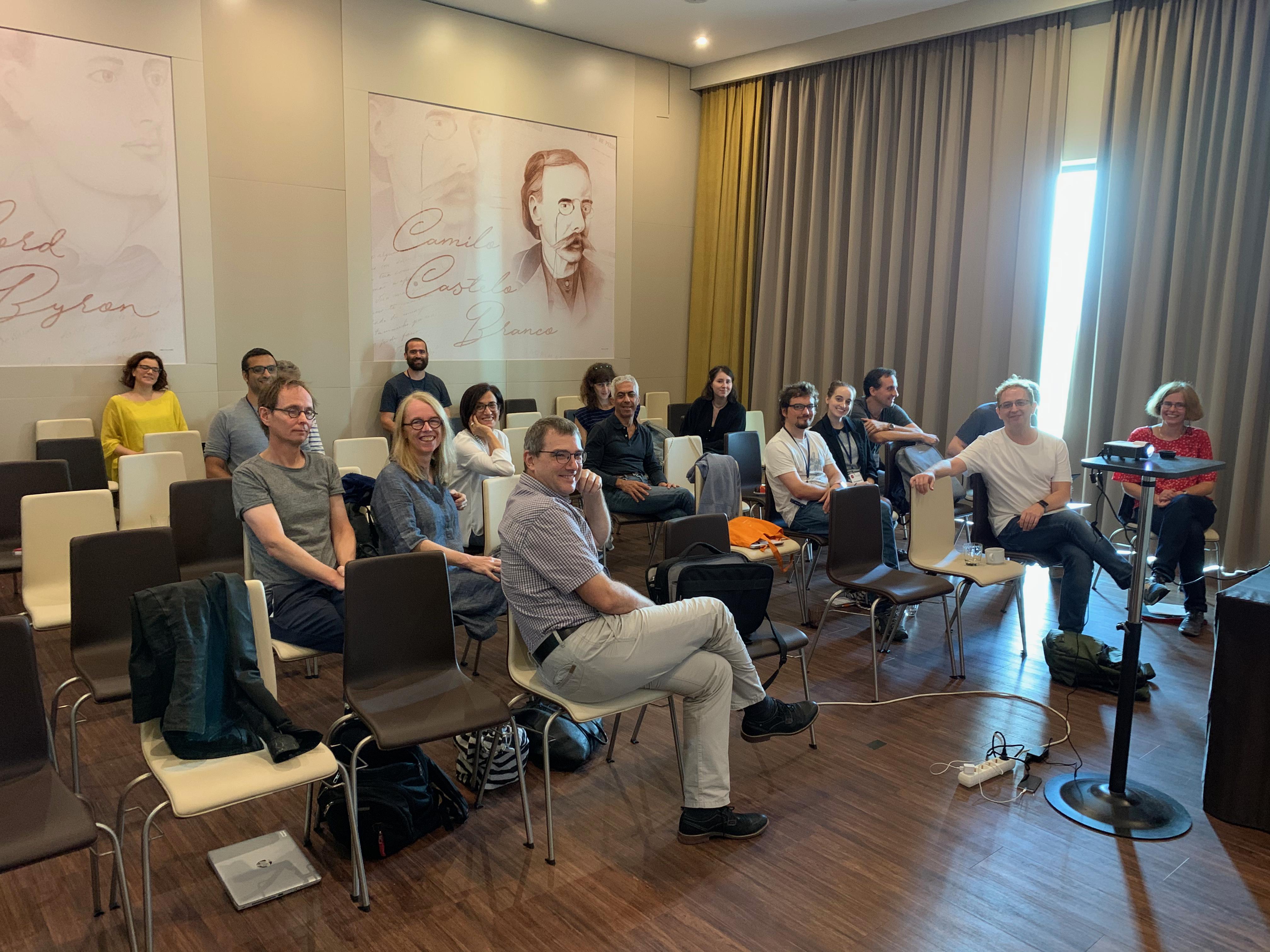
- Joint TEI Lex-0 / Ontolex-Lemon Meeting. Collocated with eLex 2019. Sintra, Portugal (4 October 2019). Funded by ELEXIS.
- Toward a TEI Lex-0 Publisher: A Workshop, DARIAH-EU Coordination Office, Berlin (16-17 December 2019). Funded by the Belgrade Center for Digital Humanities.
11.6. Training measures
TEI Lex-0 and best practices in lexical data modeling have been introduced to large number of young scholars at various training events, including:
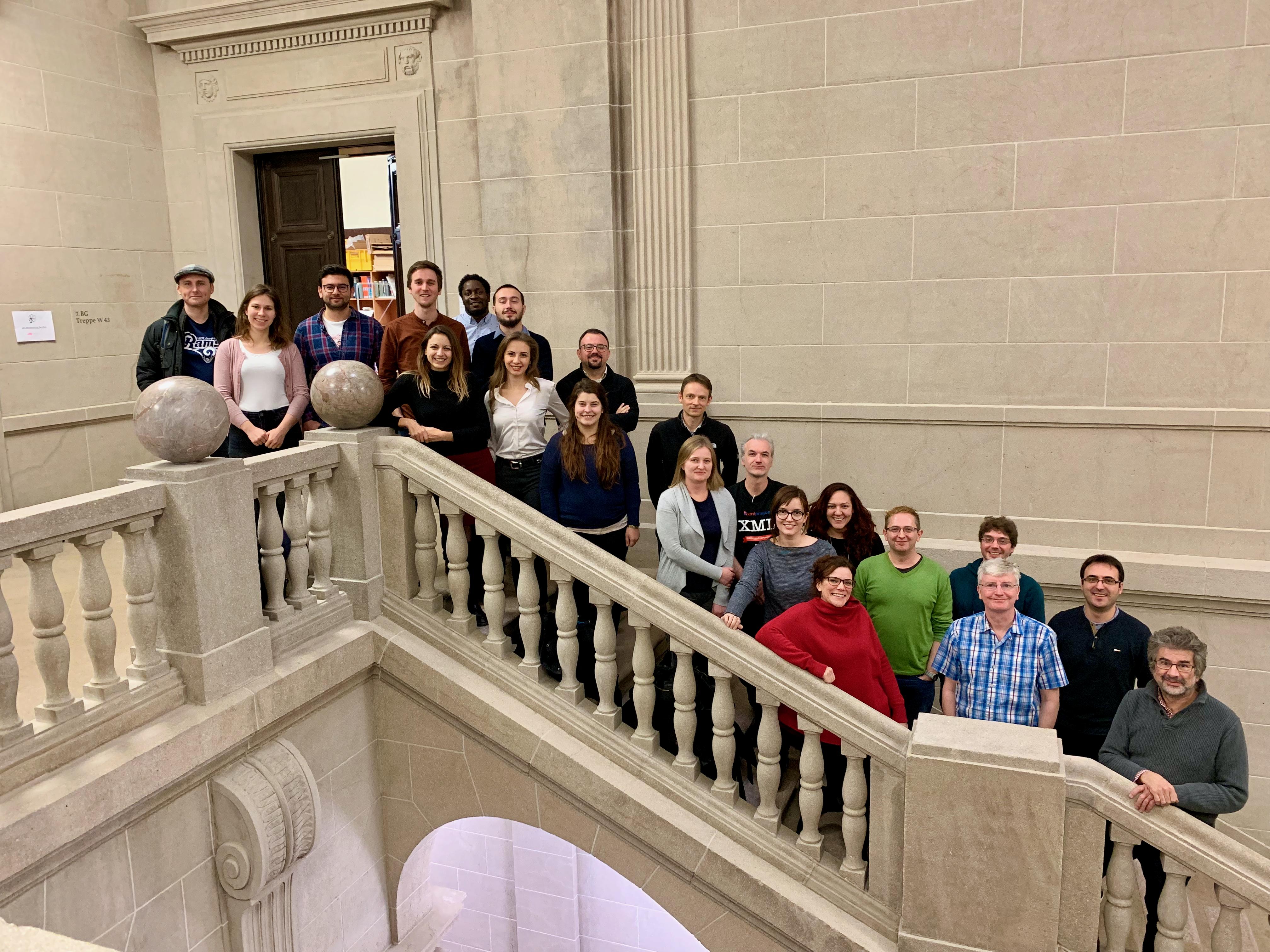
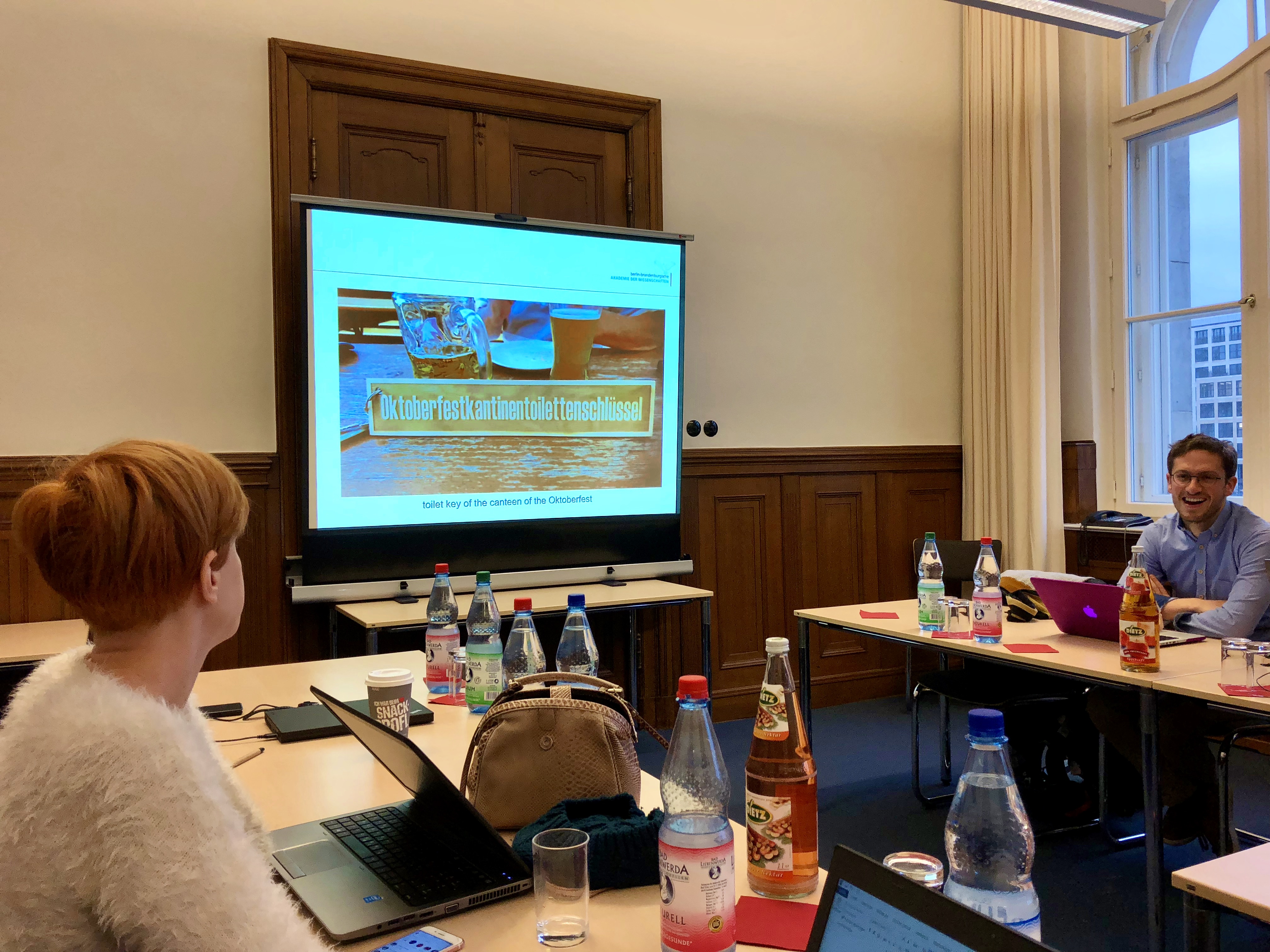
- Lexical Data Masterclass 2017. Co-organized by DARIAH, the Berlin Brandenburg Academy of Sciences (BBAW), Inria and the Belgrade Center for Digital Humanities, with the support of the German Ministry of Education and Research (BMBF), CLARIN and DARIAH-DE. For an overview, check out this blog post.
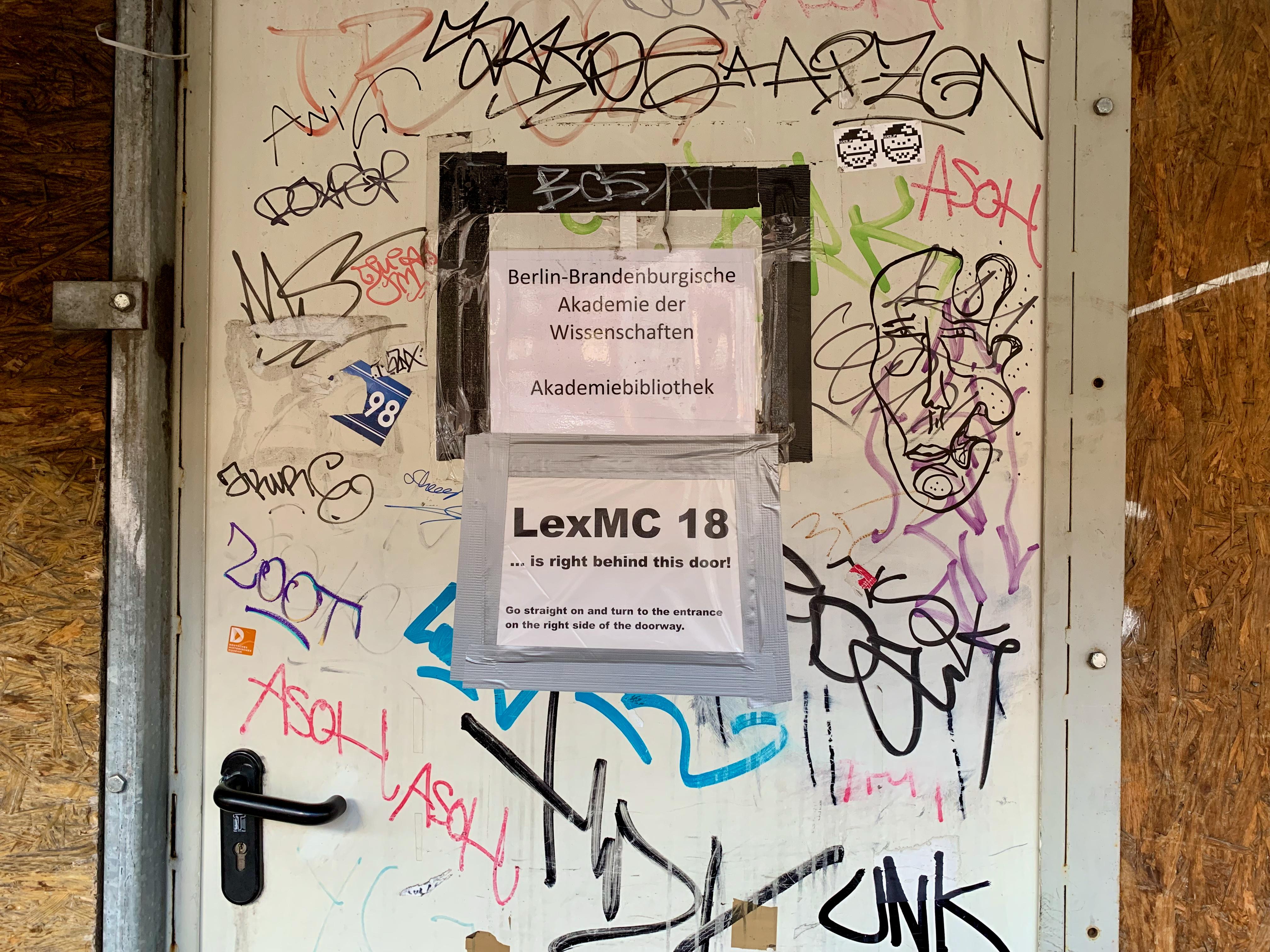
- Lexical Data Masterclass 2018. Co-organized by DARIAH, the Berlin Brandenburg Academy of Sciences (BBAW), Inria and the Belgrade Center for Digital Humanities, with the support of the German Ministry of Education and Research (BMBF), French Ministry for Higher Education, Research and Innovation (MESRI), ELEXIS, CLARIN and DARIAH-DE. For an overview, check out From Àbèsàbèsì to XPath on DigiLex.
- From Print to Screen: The Theory and Practice of Digitizing Dictionaries. Lisbon Summer School in Linguistics (2-6 July 2018).
- Encoding Dictionaries with TEI: A Masterclass. Lisbon Summer School in Linguistics (1-5 July 2019).
- DH Training Workshop: Digital Methods for Linguistic Investigation (13-15 November 2019). Organized by the Seminar für Semitistik und Arabistik, Freie Universität Berlin, with the support of the Alexander von Humboldt Foundation and Syncro Soft.
The European Digital Humanities Masterclass 2020 had to be postponed due to the Corona pandemic.
A picture is worth a thousand words